
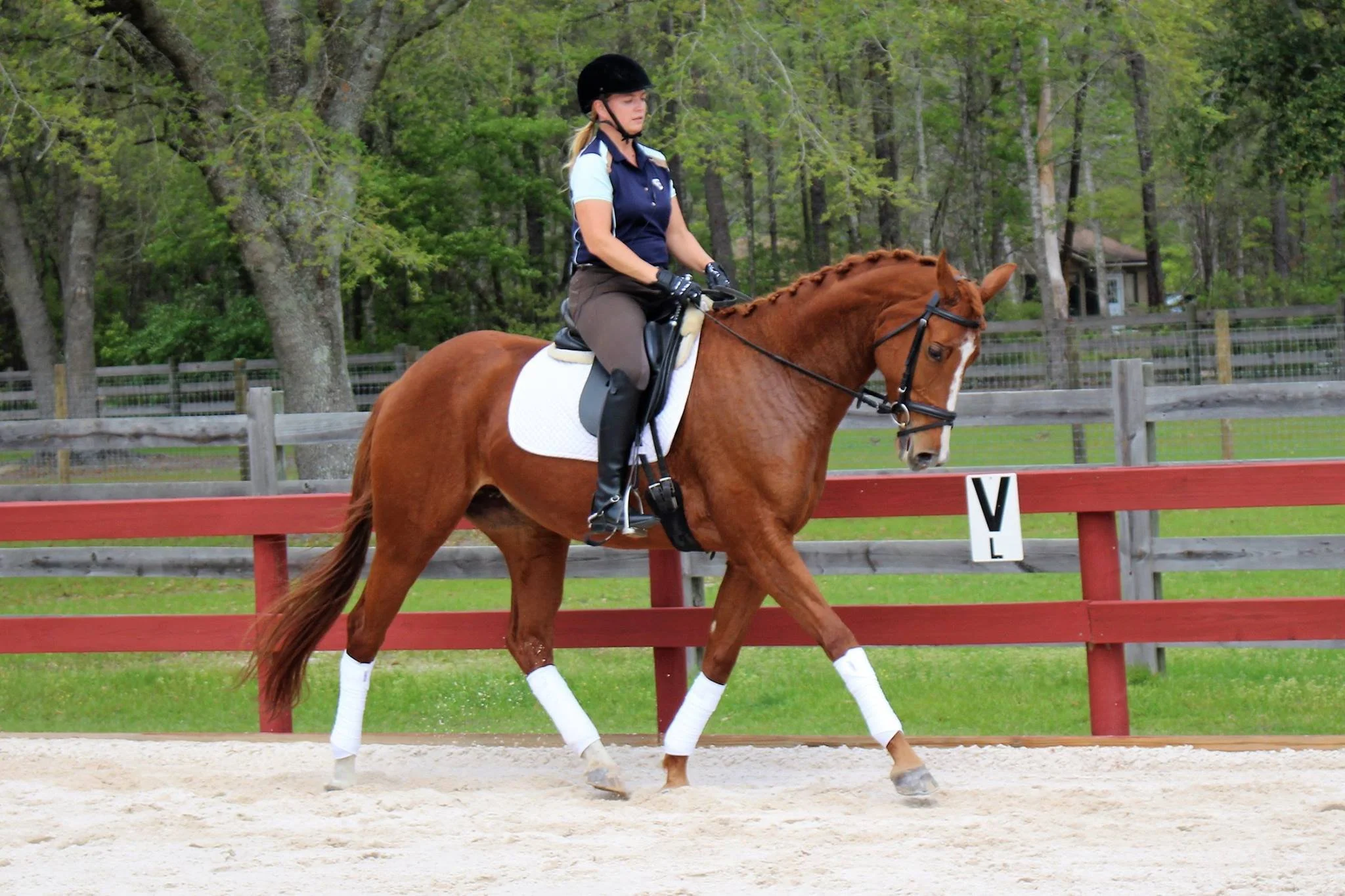
One of the most important concepts in riding is understanding that the rider’s position is their first aid.
When the horse is working well and in good balance—particularly in the working and medium gaits—we want to be elastic in our position and truly go with the horse. This does not mean pushing or driving constantly, but rather following the horse’s movement in harmony and without restriction.
However, the moment we need to make an adjustment—whether asking for more suppleness, bend, a half halt, a downward transition, or collection—the rider should first apply their position before using leg or rein aids.
What does this mean?
It means the rider briefly becomes more stable and “holds” their position slightly stronger. Instead of fully following every movement, the rider momentarily resists being moved forward by the horse. The horse immediately feels that change and becomes attentive, waiting to hear what comes next.
Depending on the horse’s sensitivity, this adjustment in position alone may be enough. Other horses may need to feel the rider’s seat transmitted through the reins. In this case, there may be a brief increase in rein tension—but importantly, this does not come from pulling backward. Instead, it comes from the horse traveling forward into a rein that is being quietly held by a rider whose body is no longer completely following the motion.
When a horse learns to respond to the rider’s position as an aid, the result is greater lightness, harmony, elegance, and ultimately more comfort for the horse.
Understanding the Ideal Riding Position
The ideal riding position is one in which the rider sits on the horse as though they were standing on the ground with softly bent knees.
The rider should sit as far forward in the saddle as comfortably possible, positioned on the back of the seat bones. A helpful image is to imagine the pelvis as a bowl filled with water—you do not want the water spilling out the front or the back.
The most common error is allowing the water to spill out the front. This happens when the rider hollows the lower back and tips the pelvis forward, placing excessive pressure on the pommel with the pubic bone. To correct this, most riders need to think about engaging the lower abdominal muscles—specifically the area between the belly button and pubic bone—while also allowing the hips to open and soften.
The leg position is equally important. The rider sits with the thigh and knee slightly inwardly rotated so they are resting more on the inside of the thigh rather than the back of it. The knee maintains a soft bend, while the foot rests in the stirrup with the big toe against the inside branch of the iron. The stirrup should sit slightly in front of the ball of the foot with even weight distributed across it.
The ankle must remain relaxed and supple, feathering downward to absorb motion naturally. This is very different from forcing the heel down or locking the ankle, both of which create stiffness.
In the upper body, the rider sits tall without tension. The shoulders are back and down, connected into the rider’s back rather than held rigidly. The upper arm hangs vertically beneath the shoulder, the elbow rests above the pelvis, and the rider maintains a straight line from elbow to bit.
Elasticity and Collection
When the horse is moving freely forward as the rider desires, the rider should remain highly elastic. Every joint in the rider’s body should softly move forward and back, up and down, and side to side in order to follow the horse’s motion without restriction.
But when it is time to collect the horse, the rider first changes the elasticity of their position.
I often describe this as becoming more like a tighter rubber band.
The rider still follows the horse’s movement, but not quite as much. The horse feels that subtle increase in stability and begins to come back toward the rider, resulting in greater balance and collection.
True collection does not come from pulling the horse together—it comes from the horse responding to the rider’s body.
And it all begins with position.